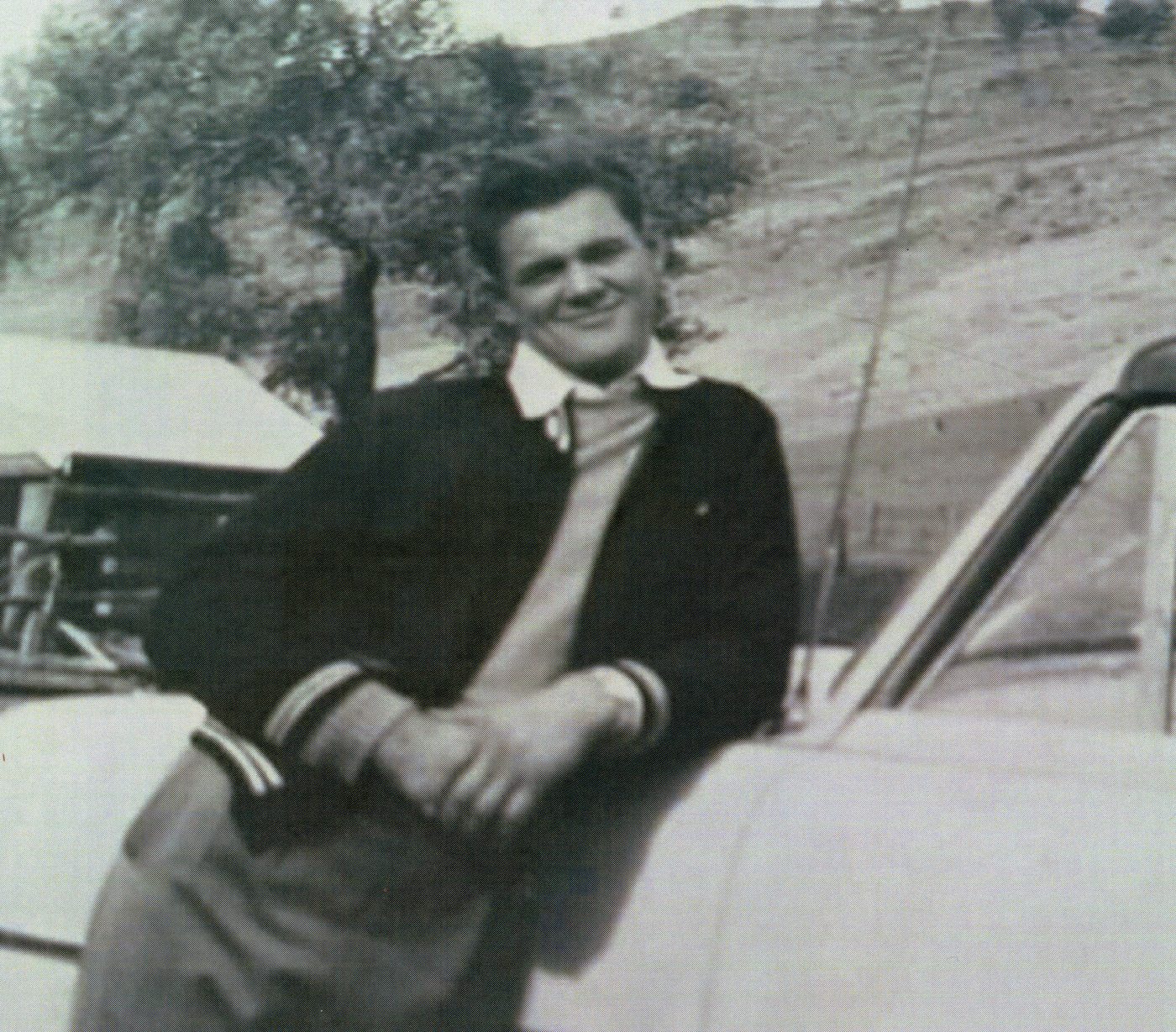
1954
A Fourteen-Year-Old on the Road Crew
Wayne's working life began at fourteen — not old enough for a driver's licence, but old enough to labour for the Country Roads Board in Jamieson, Victoria, installing culverts and road extensions to allow the Eildon Weir to be raised around him. It was the first of more than seventy years on the tools.
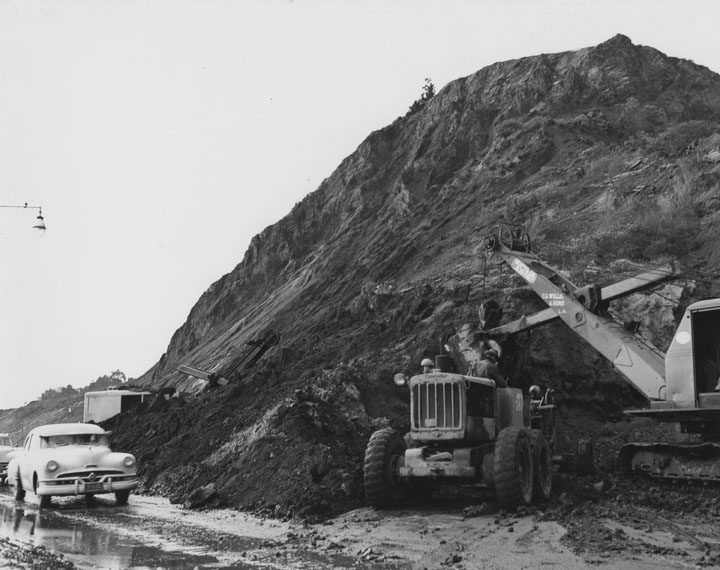
Photo suggestionWayne as a teenager, or a CRB road crew, Jamieson VIC (c.1954)
Expected file: photos/1954-crb-road-crew.jpg
1955
Across the Strait to the Hydro Scheme
Wayne travelled to Tasmania to work on the Hydro-Electric Commission's Wayatinah and Tarraleah scheme, part of the Lower Derwent River hydroelectric development then underway in the state's Central Highlands — one of the largest construction efforts in Tasmania at the time.
Based out of the workers' village built to house the project's labour force, it exposed a teenage Wayne to the full breadth of heavy civil construction in one posting: bulk earthworks and quarrying to win the rock fill for the Wayatinah Lagoon embankment dam, haulage of that material over rough mountain access roads, the driving of a diversion tunnel to route water to the power station, and the dam building and concreting works that tied it all together. It was an early, formative education in dam building, tunnelling and large-scale earthmoving — skills he would call on again and again across the decades that followed, from the Dartmouth Dam to the tunnel at Mt Hotham.
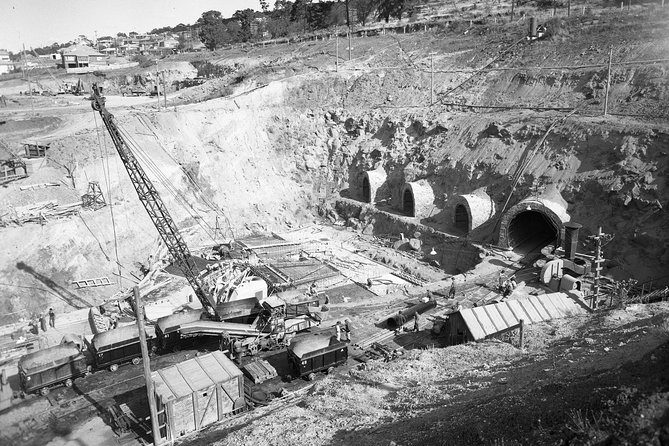
Photo suggestionTasmanian Hydro-Electric scheme worksite, mid-1950s
Expected file: photos/1955-tasmania-hydro.jpg
1956
Behind the Controls of a Dozer
Back on the mainland and behind the controls of a dozer for the first time, Wayne took on an operator role with a prominent regional earthmoving contractor — working the Eildon Dam lift road works around Jamieson, then dam-sinking work through Gippsland. The apprenticeship in earthmoving had begun in earnest.
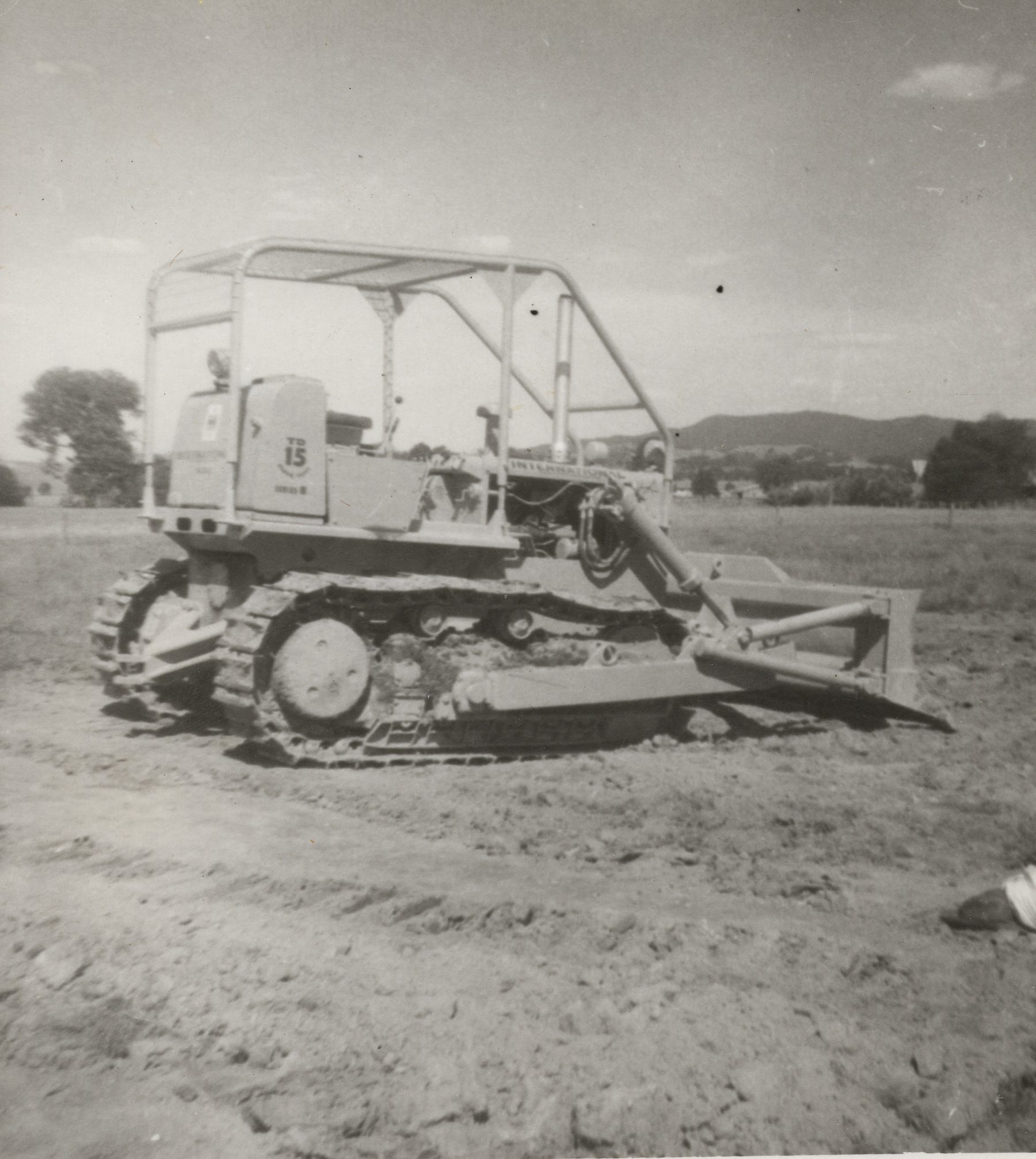
Photo suggestionPeriod dozer at work, Eildon Dam or Gippsland, 1956
Expected file: photos/1956-eildon-dozer.jpg
1957
The Hume Weir Wall Lift
Dozer and earthworks work continued in and around the Tallangatta district, contributing to the Hume Weir wall lift road works — one of the region's major infrastructure projects, and further proof that Wayne could be trusted with the biggest jobs on offer.
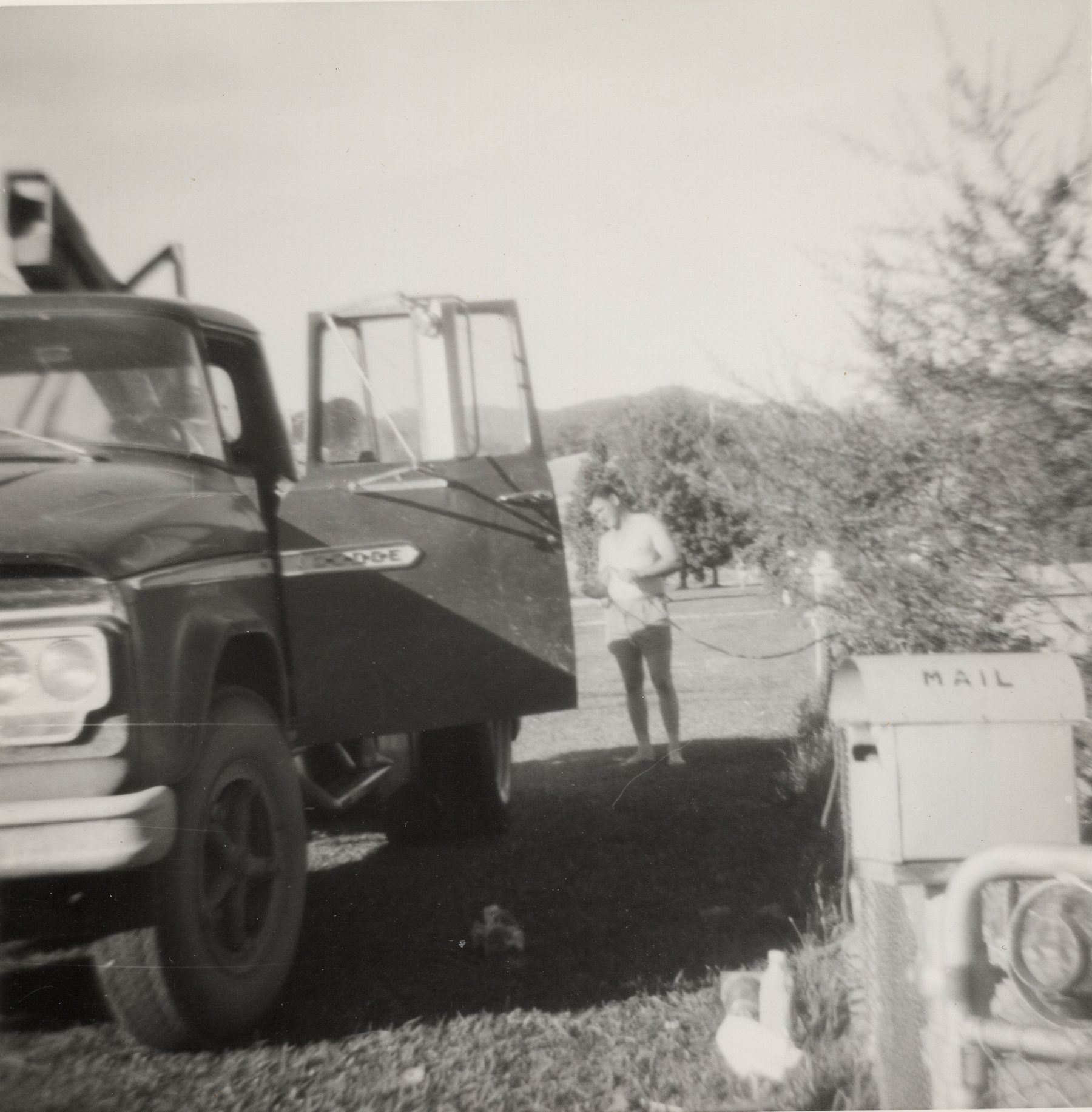
Photo suggestionHume Weir / Tallangatta district earthworks, 1957
Expected file: photos/1957-hume-weir.jpg
1963
Dozers and Tournapulls
Wayne joined one of the state's largest roadworks contractors on the Traralgon roadworks, stepping up to heavier machinery — dozers and tournapulls — and building a reputation for getting difficult ground moved properly, whatever the conditions.
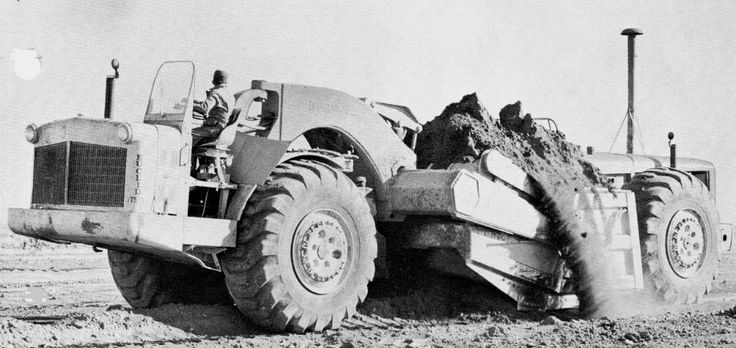
Photo suggestionTournapull or dozer, Traralgon roadworks, 1963
Expected file: photos/1963-traralgon-roadworks.jpg
1966
His First Machine
Wayne took on a role with a major freeway contractor, delivering the starting package of the Hume Freeway at Kalkallo. Later that year, he took the call to step in and help run the business of a local contractor who had been injured — and out of that, purchased his first machine, a CAT D6 "9U" bulldozer, for $8,000.
It was the start of Wayne's own contracting business, taking on dam-sinking and farm work around the Corryong region. Every business, every contract, every job site the family has taken on since traces back to that one machine.
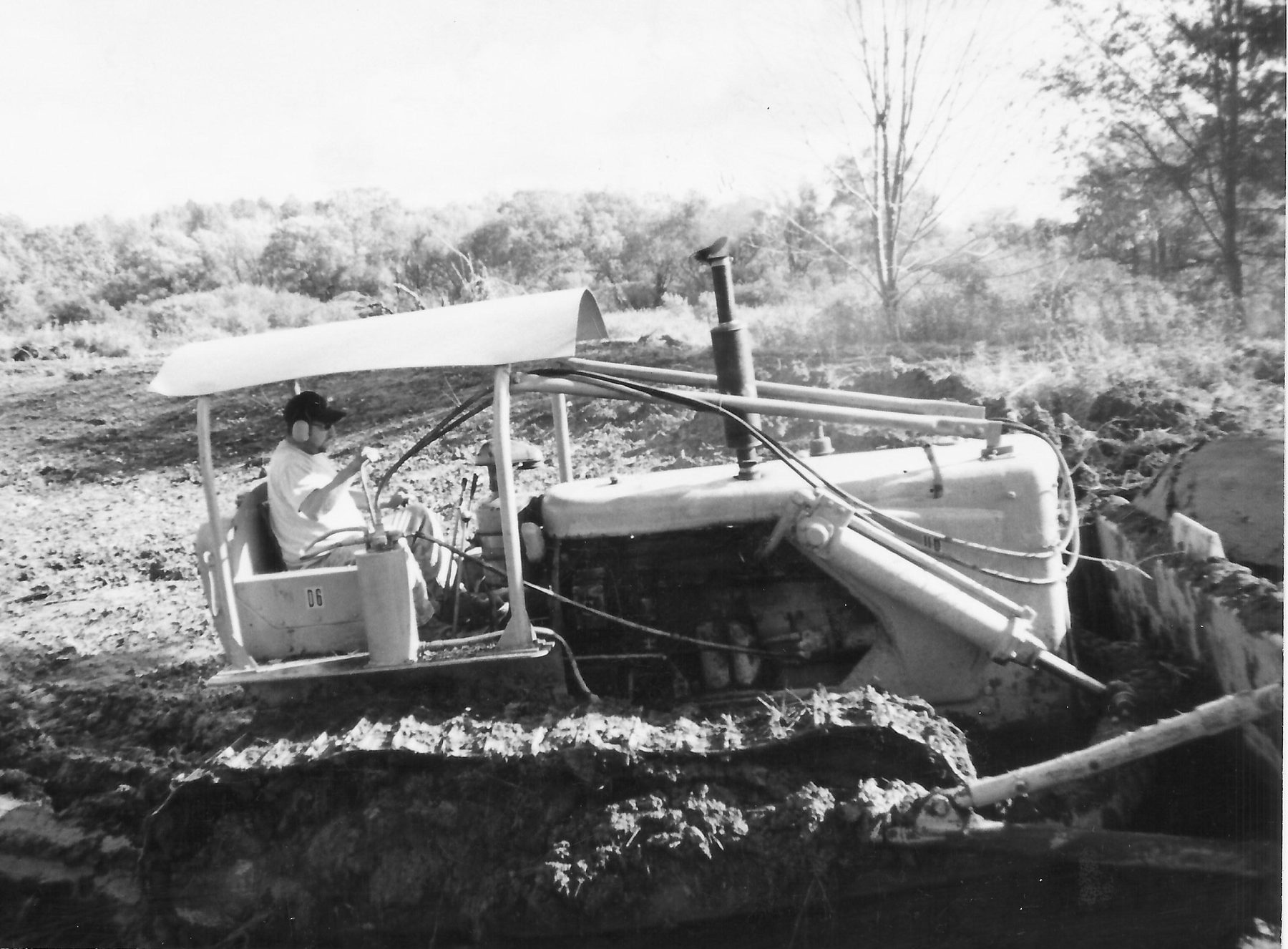
Photo suggestionCAT D6 9U bulldozer (period-correct model) — a strong candidate for a hero image
Expected file: photos/1966-first-dozer.jpg
1967
Into the Old-Growth Alpine Ash
A turning point: this was Wayne's first step from owner-operator to full-scale contractor — running teams of men and machines on some of the toughest terrain in the state.
At twenty-seven, Wayne moved into the logging industry under his own name, trading as Martyn's Myrtleford — falling, snigging and hauling hardwood, old-growth Alpine Ash timber from steep, unforgiving country.
The work was as dangerous as it was physical. Crews marched into the mountains on foot, carrying heavy equipment up terrain too steep for machinery to reach, then felled timber that had stood for centuries — much of it by hand, where the smallest mistake carried real consequences.
Each autumn, in the off-season, his dozers worked in pairs, linked by heavy chains, clearing forested blocks of up to 600 acres for the Forests Commission, including large sections around the Buffalo River.
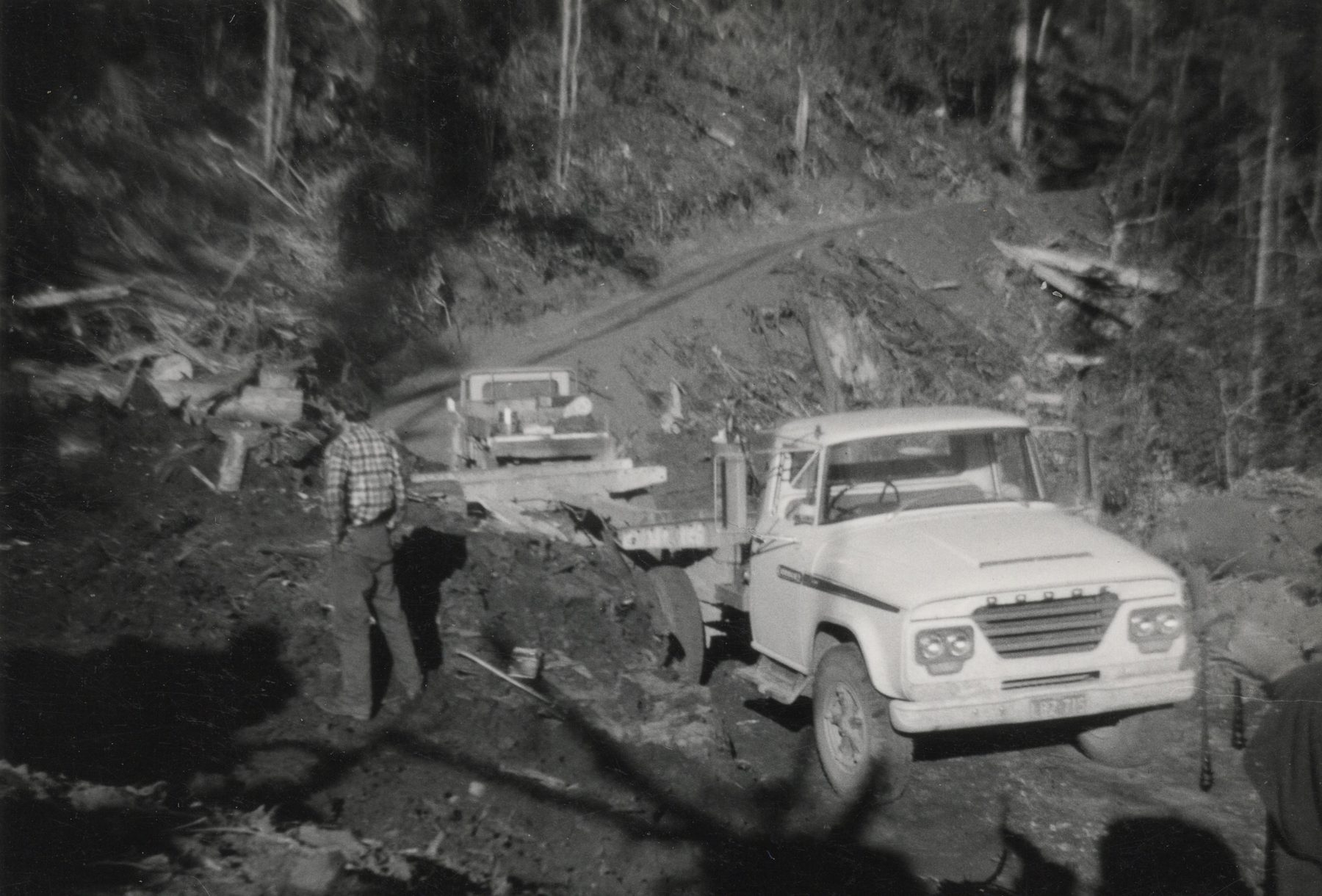
Photo suggestionPaired dozers chain-clearing, Buffalo River area, or an Alpine Ash felling crew, late 1960s
Expected file: photos/1967-old-growth-logging.jpg
1969
Adding Horsepower to the Fleet
Wayne expanded into log trucking, growing the fleet with a major investment in truck-and-trailer combinations to move the hardwood Alpine Ash his crews were felling and loading — a significant scale-up for the time, and one that took the business from cutting timber to moving it, end to end, under its own steam.
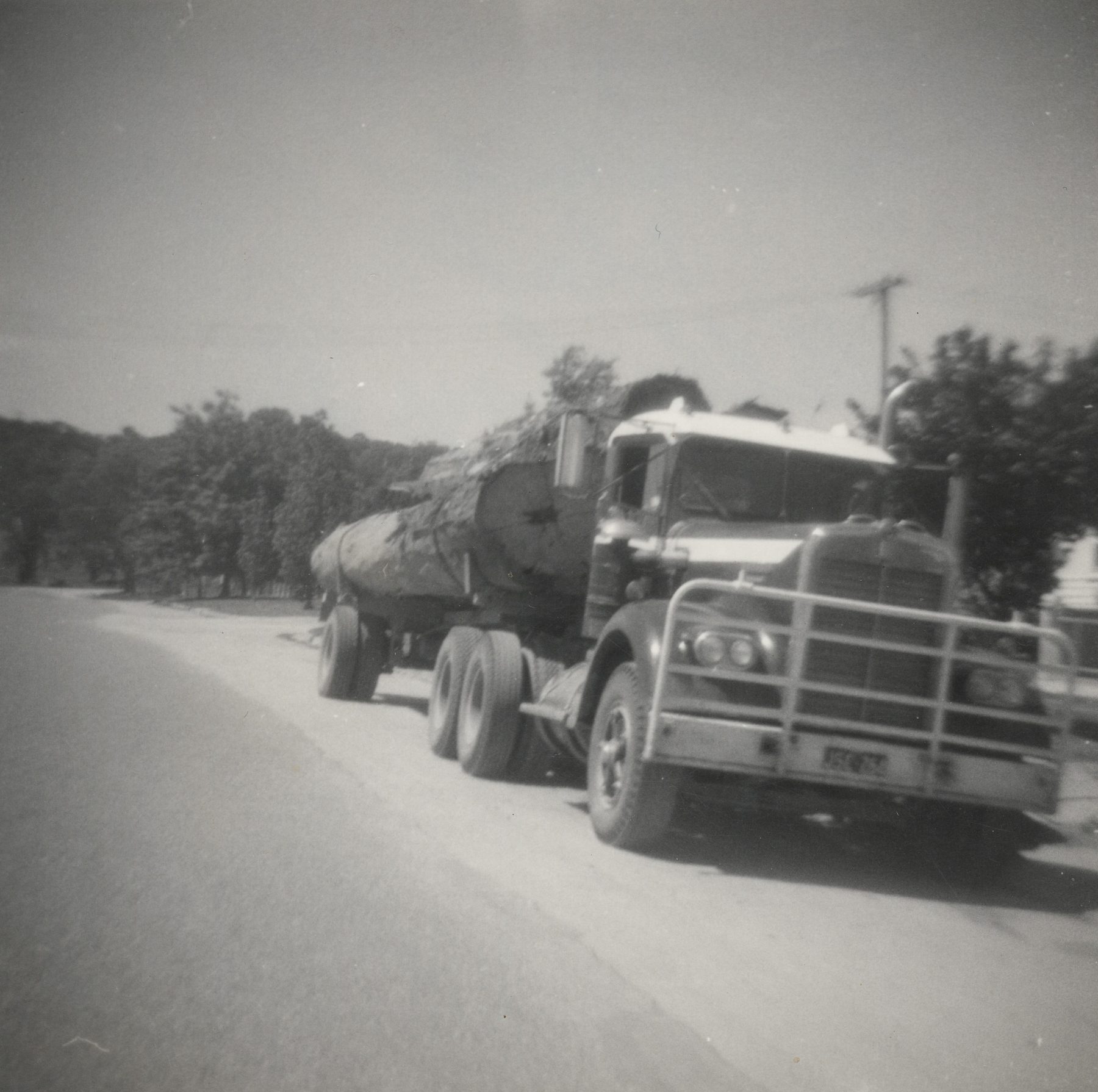
Photo suggestionLog truck and trailer combination, High Country backdrop, late 1960s
Expected file: photos/1969-log-trucks.jpg
1972
Dartmouth Dam
Wayne diversified into large-scale earthmoving, winning the pre-strip and clearing works for the Dartmouth Dam — one of Victoria's most significant infrastructure projects, and by far the largest earthworks contract he had taken on. It marked the shift from timber and roadworks into heavy civil earthmoving in its own right.
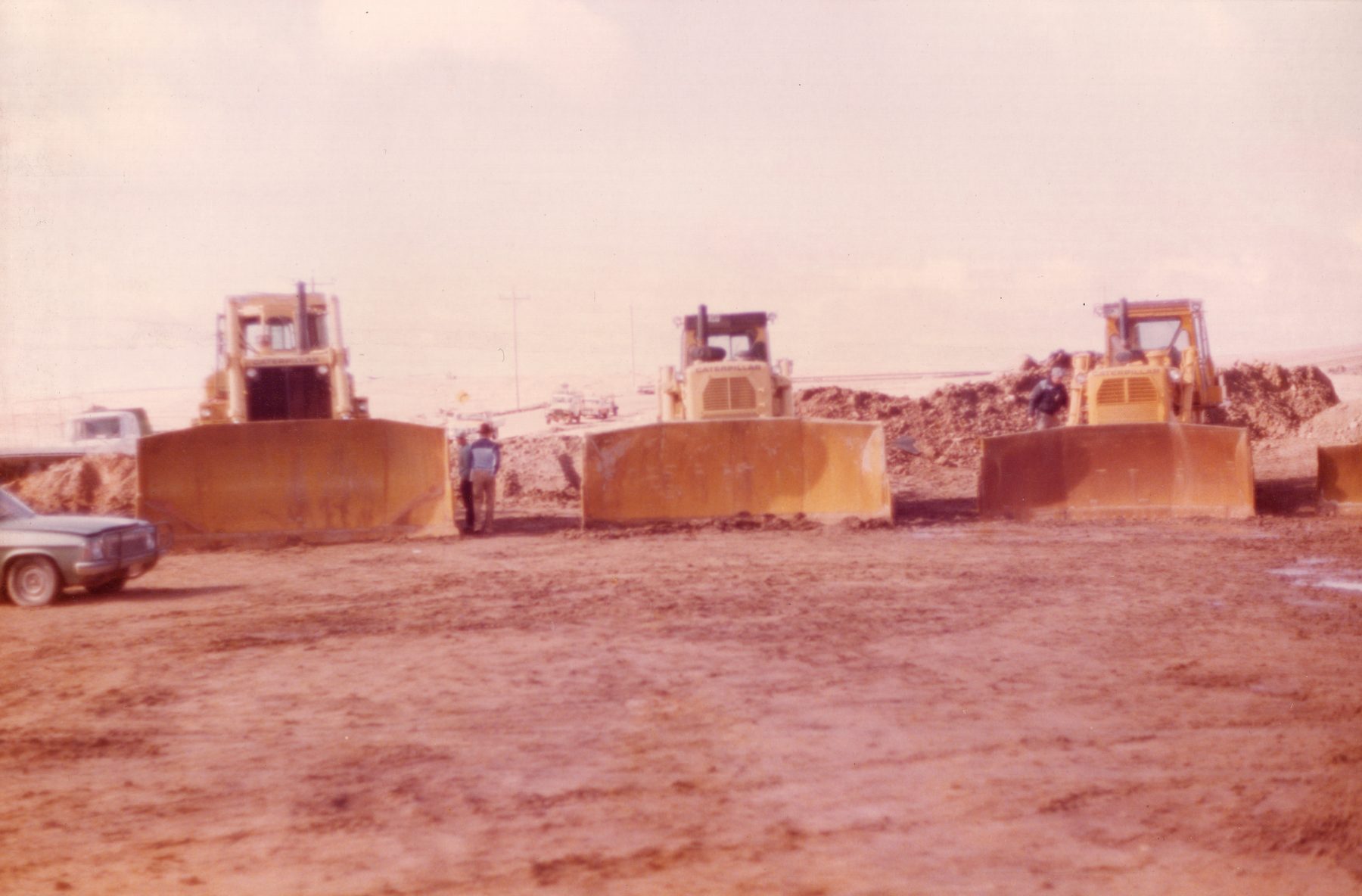
Photo suggestionDartmouth Dam pre-strip and clearing works, 1972
Expected file: photos/1972-dartmouth-dam.jpg
1983
Mt Hotham — Drilling and Blasting on Granite
Awarded the earthmoving, drilling and blasting works for the Mt Hotham ski field and run developments. It called for close-proximity trench blasting through hard, dense granite, with rigs anchored to bulldozers and winched over steep granite slopes to reach ground no conventional set-up could access — a technique the crews at the time simply called "yo-yoing."
Wayne and his team were responsible for the drill and blast of every trench needed to deliver power, gas, water and sewer to all infrastructure across the resort. Separately, they carried out the drill and blast work for each of the ski runs themselves, along with the foundations for the lift infrastructure that carries skiers up the mountain.
Word travelled fast — the same expertise was soon called on at three of Australia's other major alpine resorts, each a prominent, standalone ski business in its own right:
Falls CreekMt BullerMt Baw Baw
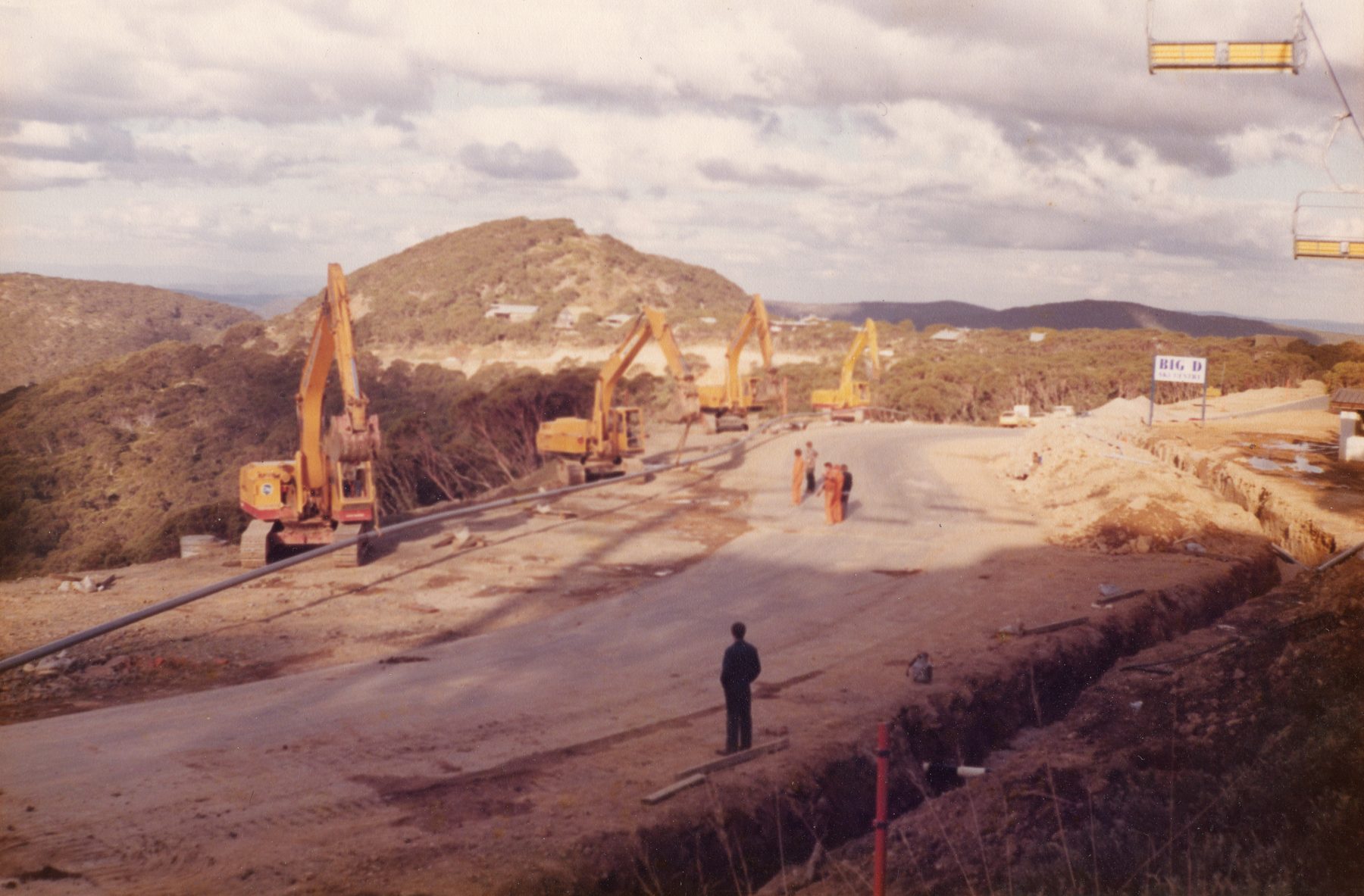
Photo suggestionExcavator craning a services pipe into the trench, Mt Hotham, 1983
Expected file: photos/1983-mt-hotham-2.jpg
Excavators lifting and craning a services pipe into position, ready to be laid in one of the trenches drilled and blasted through the mountain's granite.
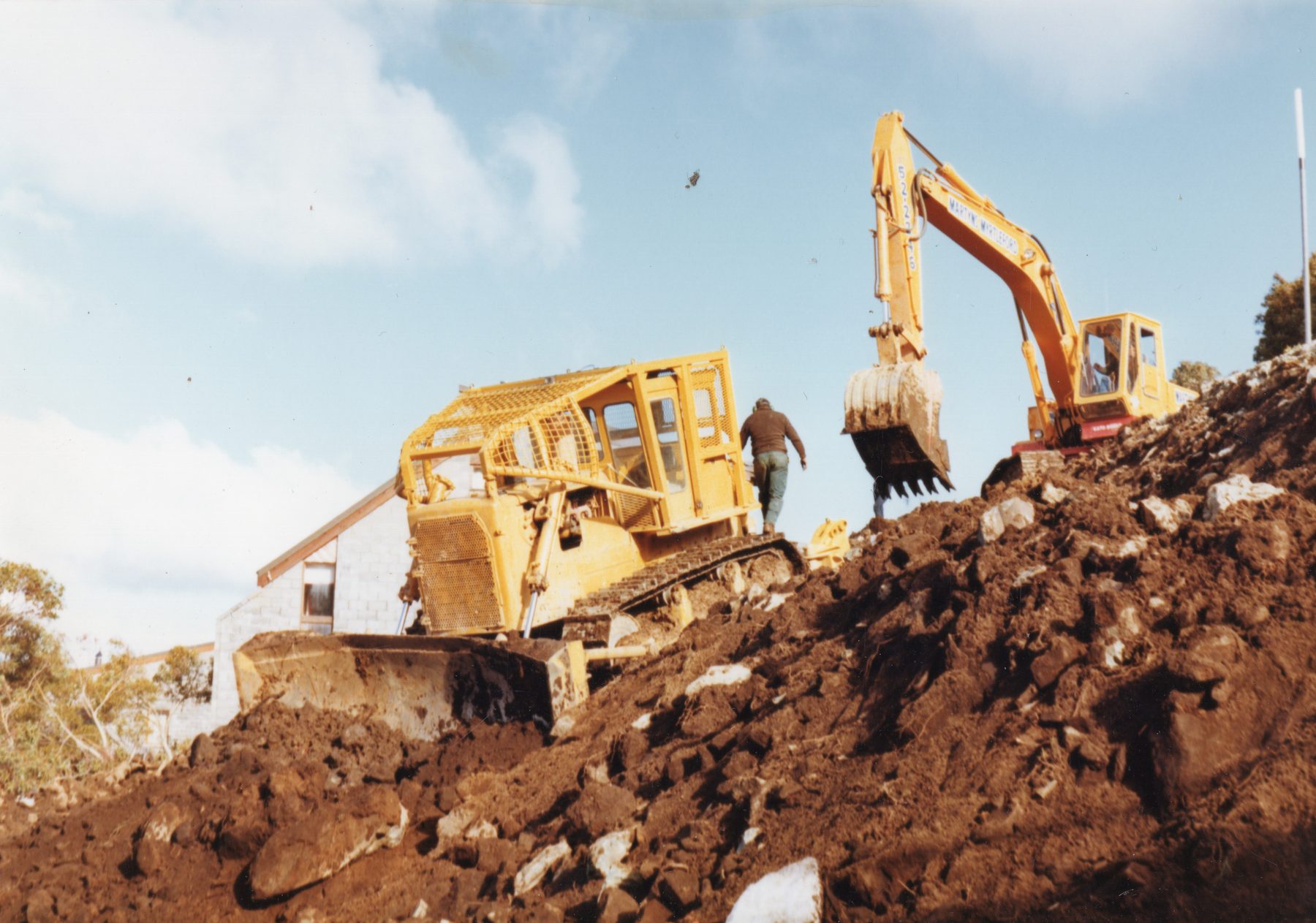
Photo suggestionDrill rig anchored on a steep granite slope, Mt Hotham, 1983
Expected file: photos/1983-mt-hotham.jpg
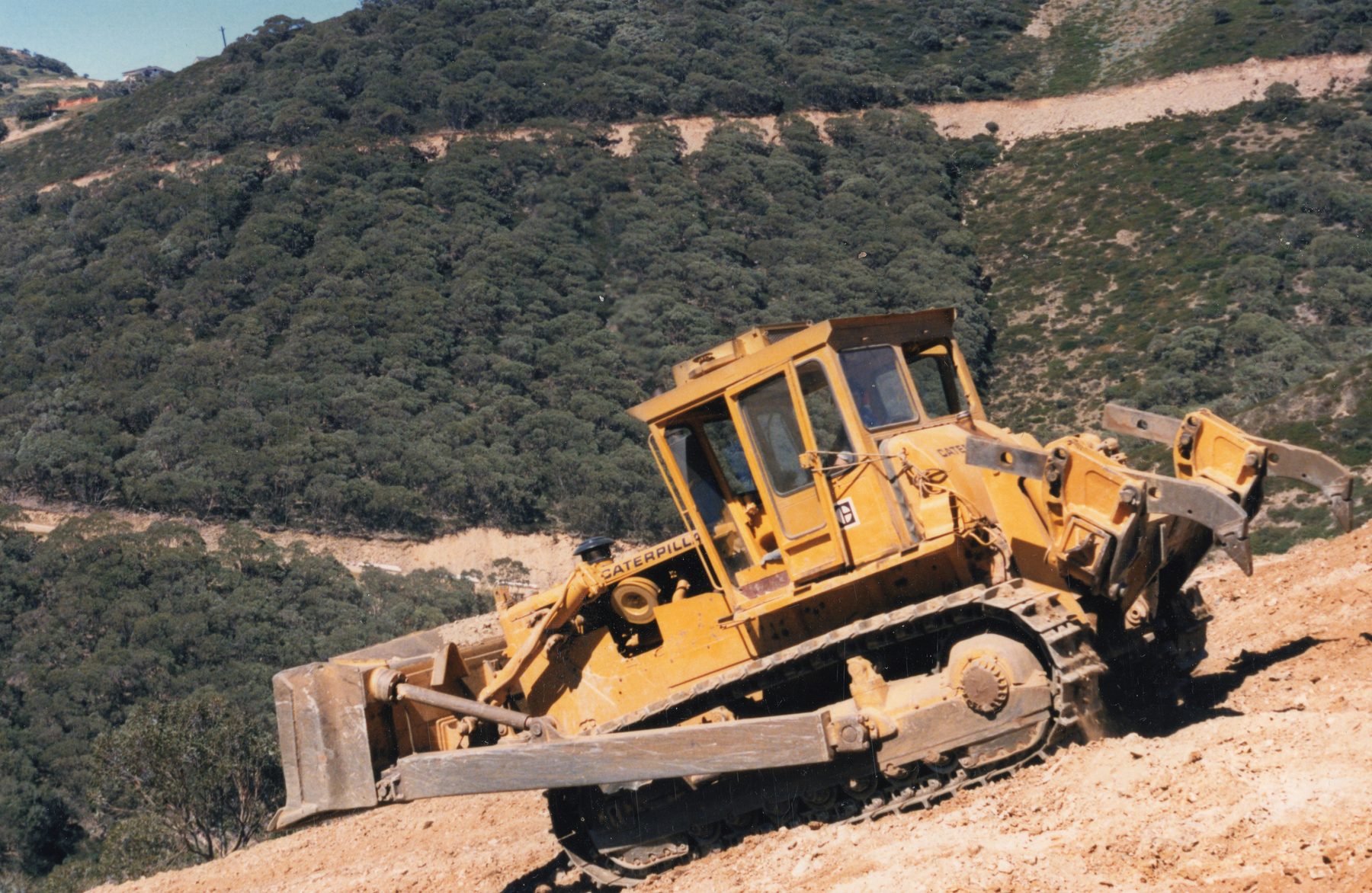
Photo suggestionMt Hotham ski run works, 1983
Expected file: photos/1983-mt-hotham-3.jpg
1985
A Tunnel for a Protected Species
At Mt Hotham, the team turned their drill and blast expertise to a very different kind of project: a dedicated tunnel, engineered to protect a native possum species and help safeguard its survival on the mountain — precision work carried out alongside the resort's larger infrastructure program.
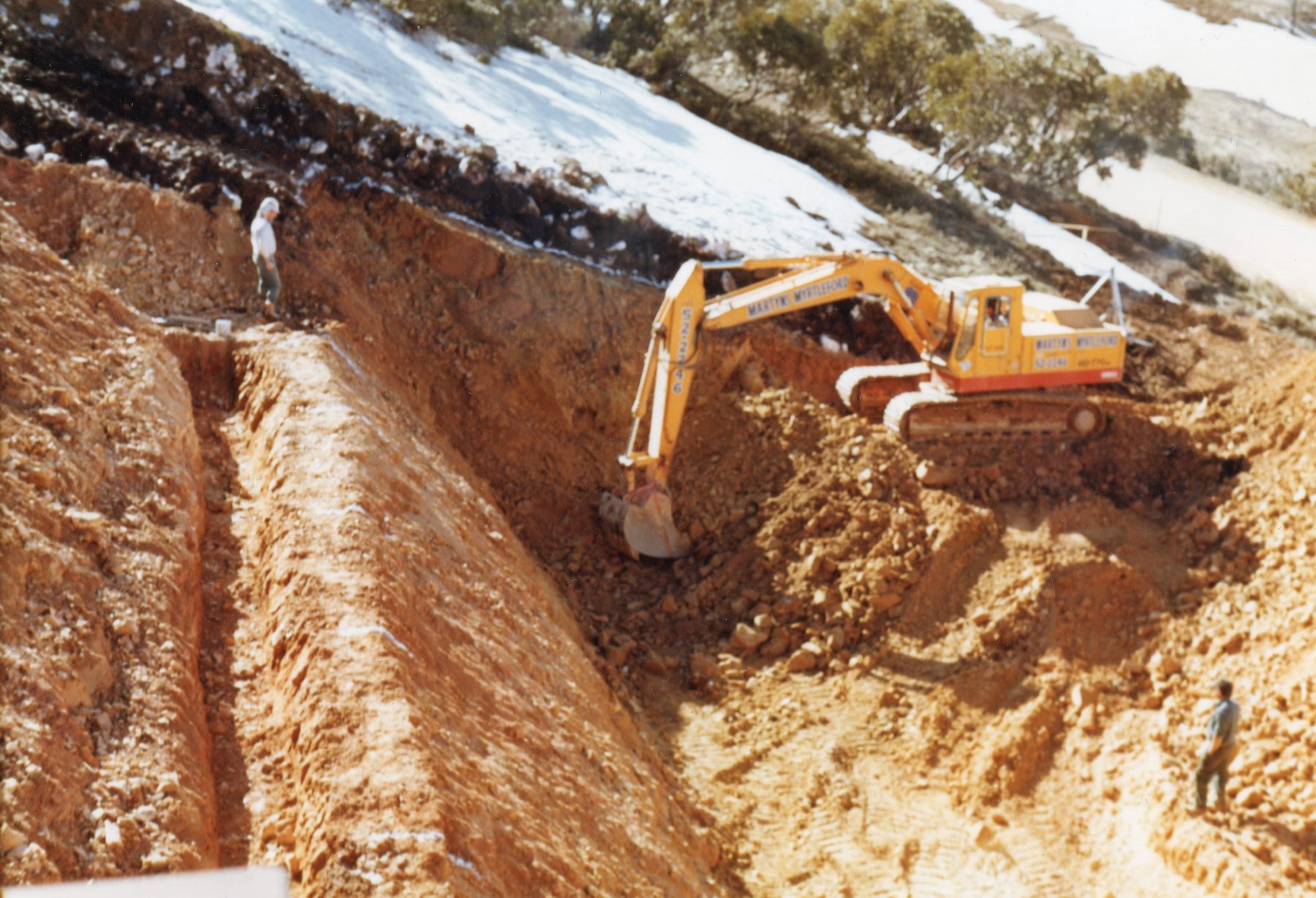
Photo suggestionMt Hotham alpine terrain / tunnel portal, or Mountain Pygmy Possum imagery with caption
Expected file: photos/1985-possum-tunnel.jpg
1986
Trenching the Runs
Ski-run trenching and drill and blast work continued across the resorts, with hired Atlas Copco Air Track rigs brought in to keep pace with the scale of it all — the alpine contracts by now a settled, reliable part of the business.
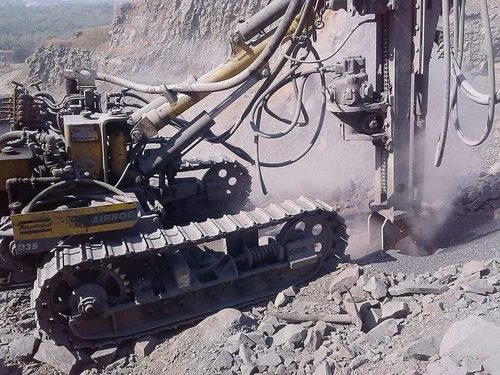
Photo suggestionAtlas Copco Air Track drill rigs, alpine resort setting, 1986
Expected file: photos/1986-atlas-copco-rig.jpg
1987
Wayne's First Drill Rig
Wayne purchased his first drill, a Tamrock DHA 400, from the Tasmanian Hydro-Electric scheme — the same scheme that had given him one of his earliest jobs decades before. It opened the door to road blasting, cutting and final trim work, and the business's first quarry drill and blast projects.
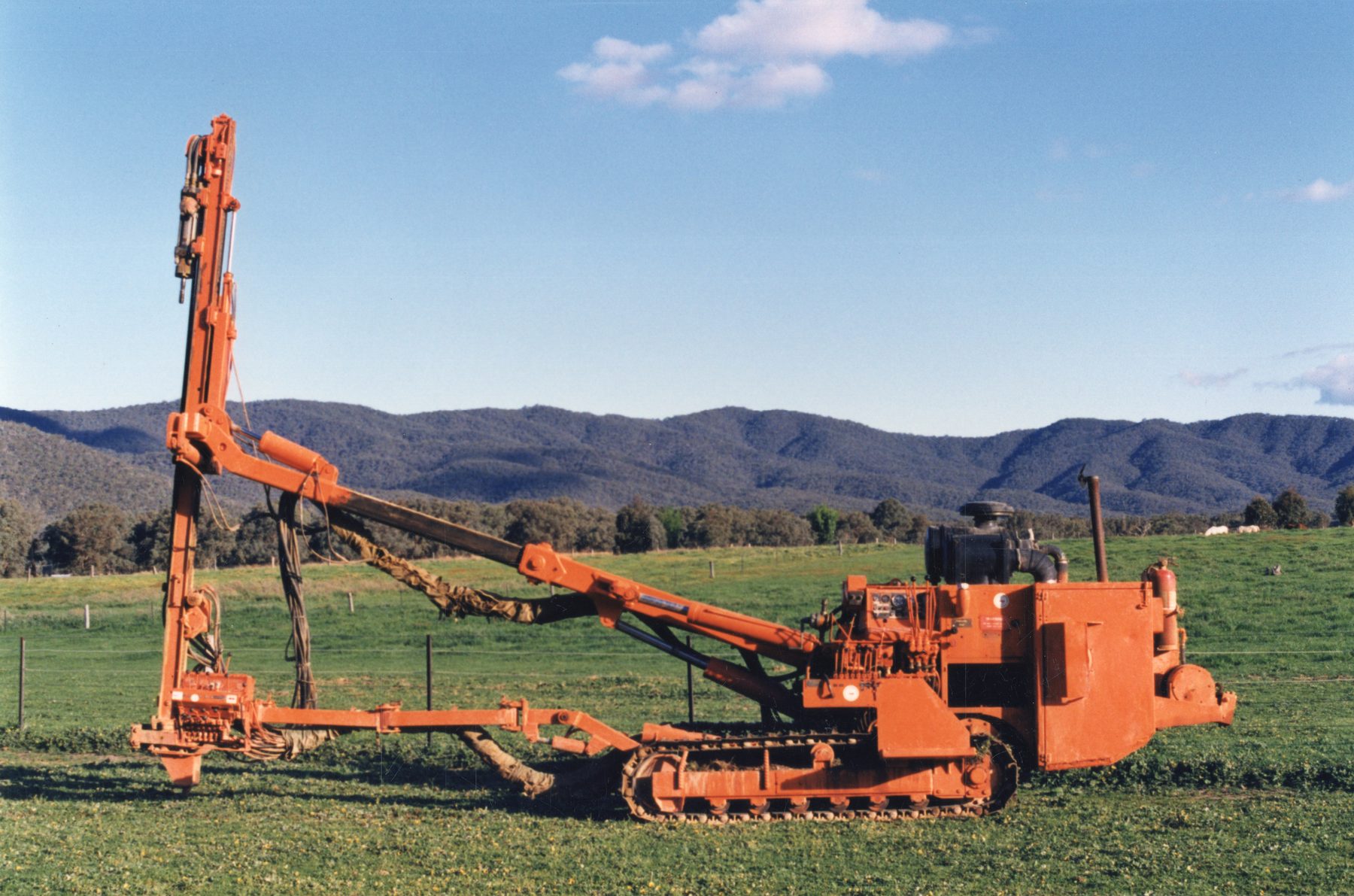
Photo suggestionTamrock 400 drill rig — a genuine milestone machine
Expected file: photos/1987-first-drill-rig.jpg
1988
Exploration Drilling at Lightning Ridge
Wayne took on exploration drilling contracts at Lightning Ridge, NSW, one of the country's best-known opal fields — a step beyond the High Country and into a new drilling discipline for the business altogether.
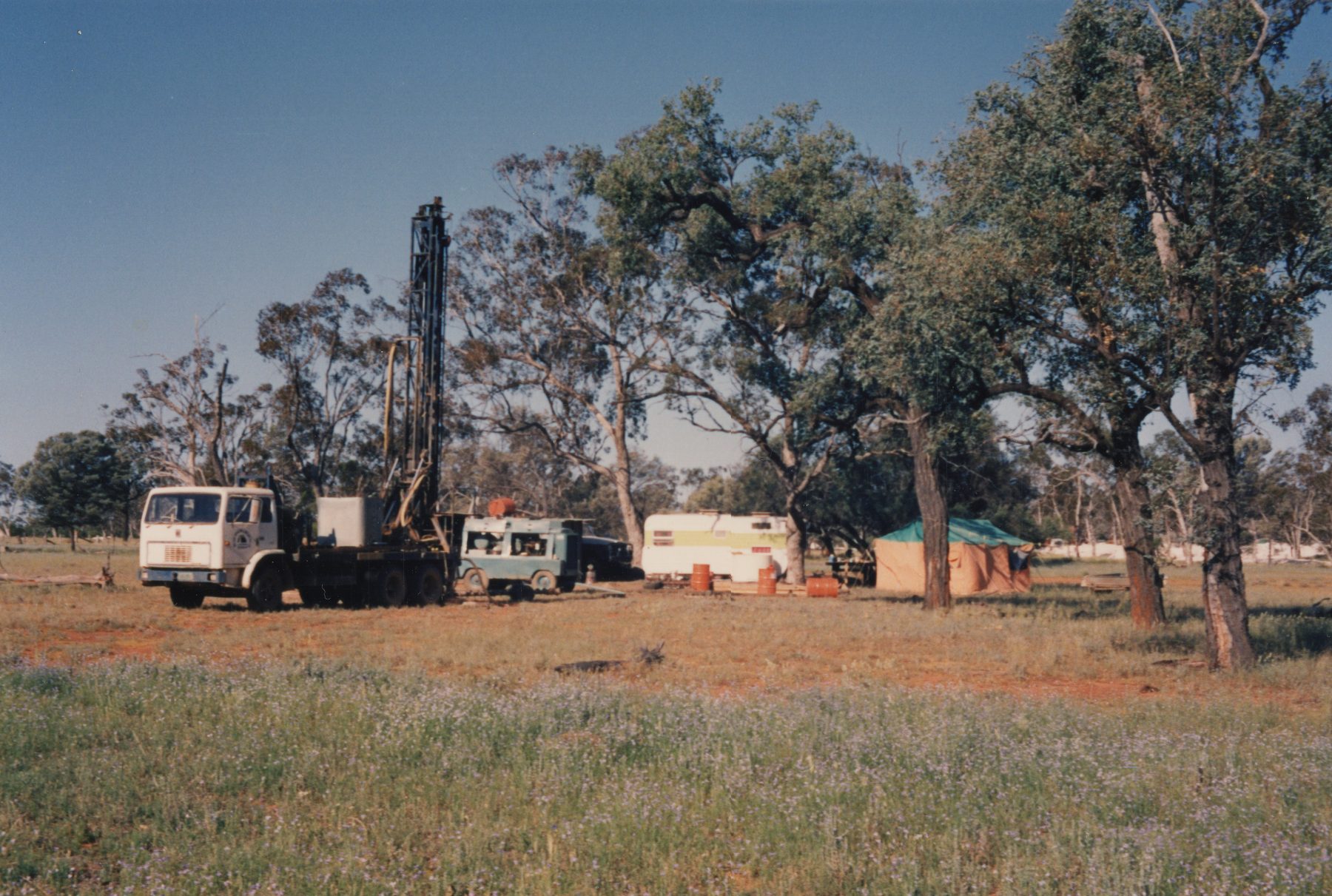
Photo suggestionExploration drilling rig, Lightning Ridge NSW, 1988
Expected file: photos/1988-lightning-ridge.jpg
1989
A New Rig, Commissioned at Shelley
Wayne purchased a brand-new Tamrock DHA 600 from CompAir, commissioned in the High Country at Shelley. The business ramped up servicing local quarries — including ACI in Beechworth — alongside Hume Freeway drill and blast work.
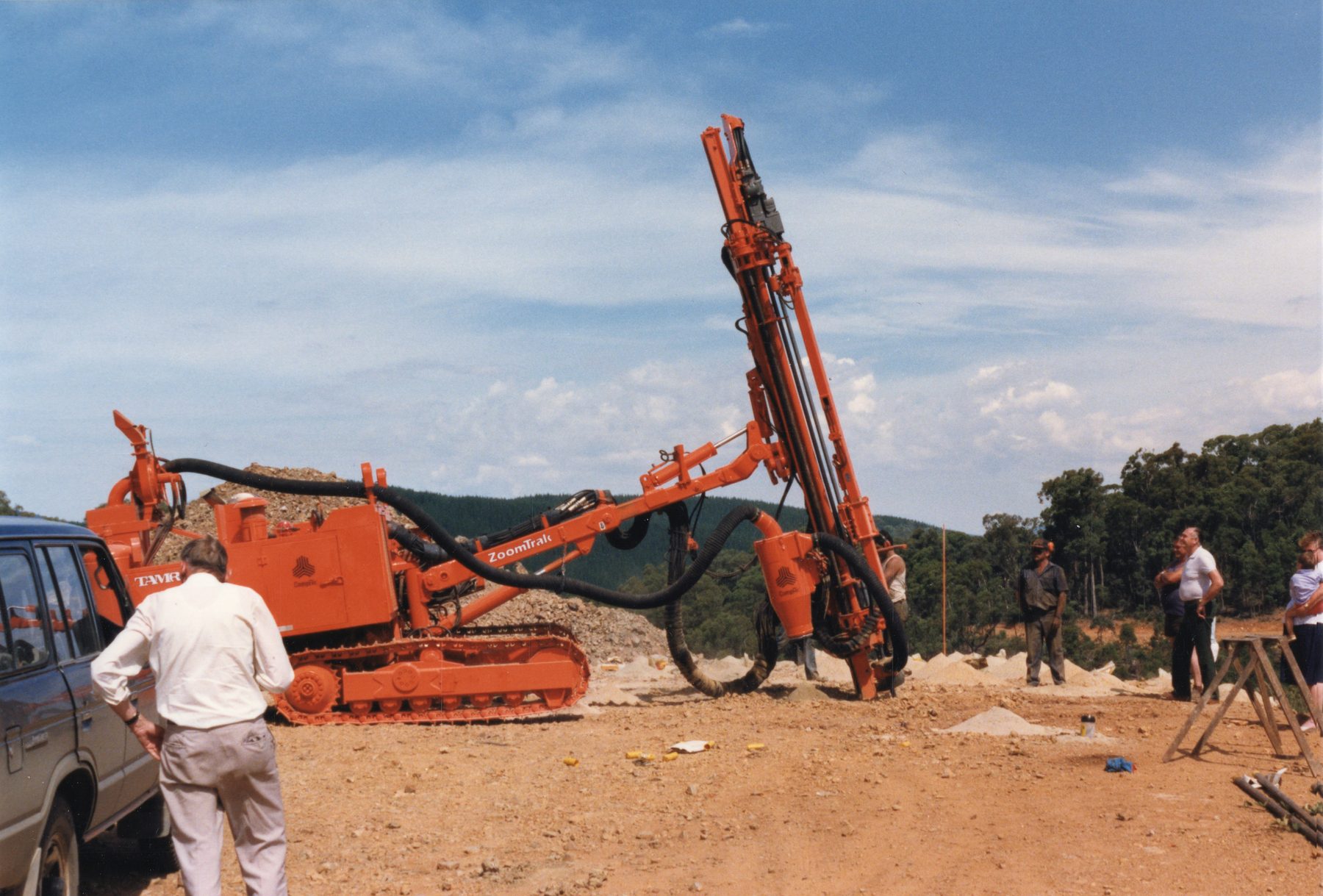
Photo suggestionNew Tamrock DHA 600 rig, commissioning at Shelley, 1989
Expected file: photos/1989-tamrock-dha600.jpg
1990
Out to the Outback
Exploration drilling work began at Lambina, deep in South Australia's outback between Coober Pedy and Alice Springs — about as remote as the business's ground would ever get, and proof of how far Wayne's reputation now carried.
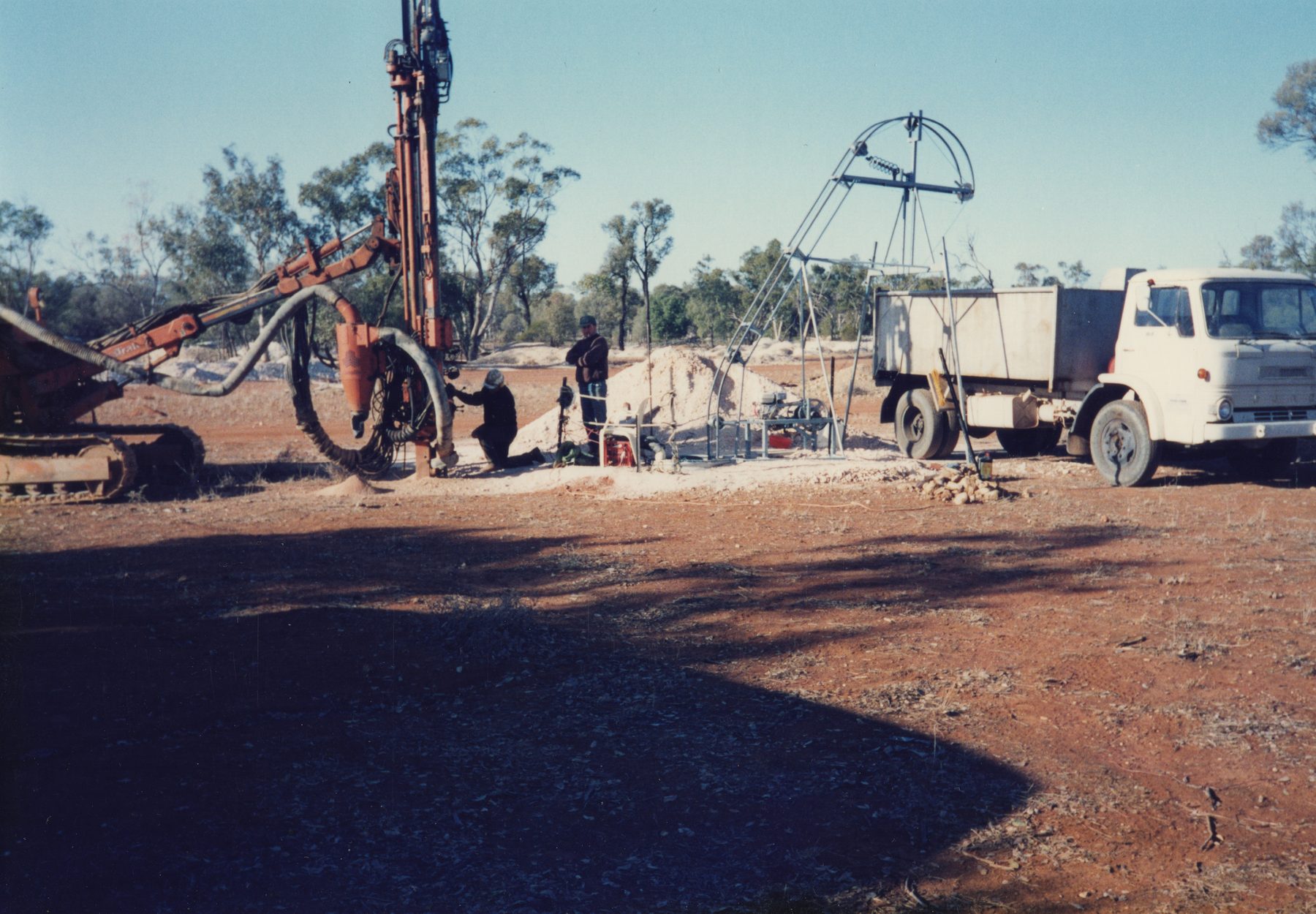
Photo suggestionExploration drilling rig, outback South Australia, 1990
Expected file: photos/1990-lambina-outback.jpg
1991
Hume Freeway, Gunning
The Hume Freeway Gunning drill and blast package, awarded by Leighton Contracting, was one of several major national contracts secured this landmark year.
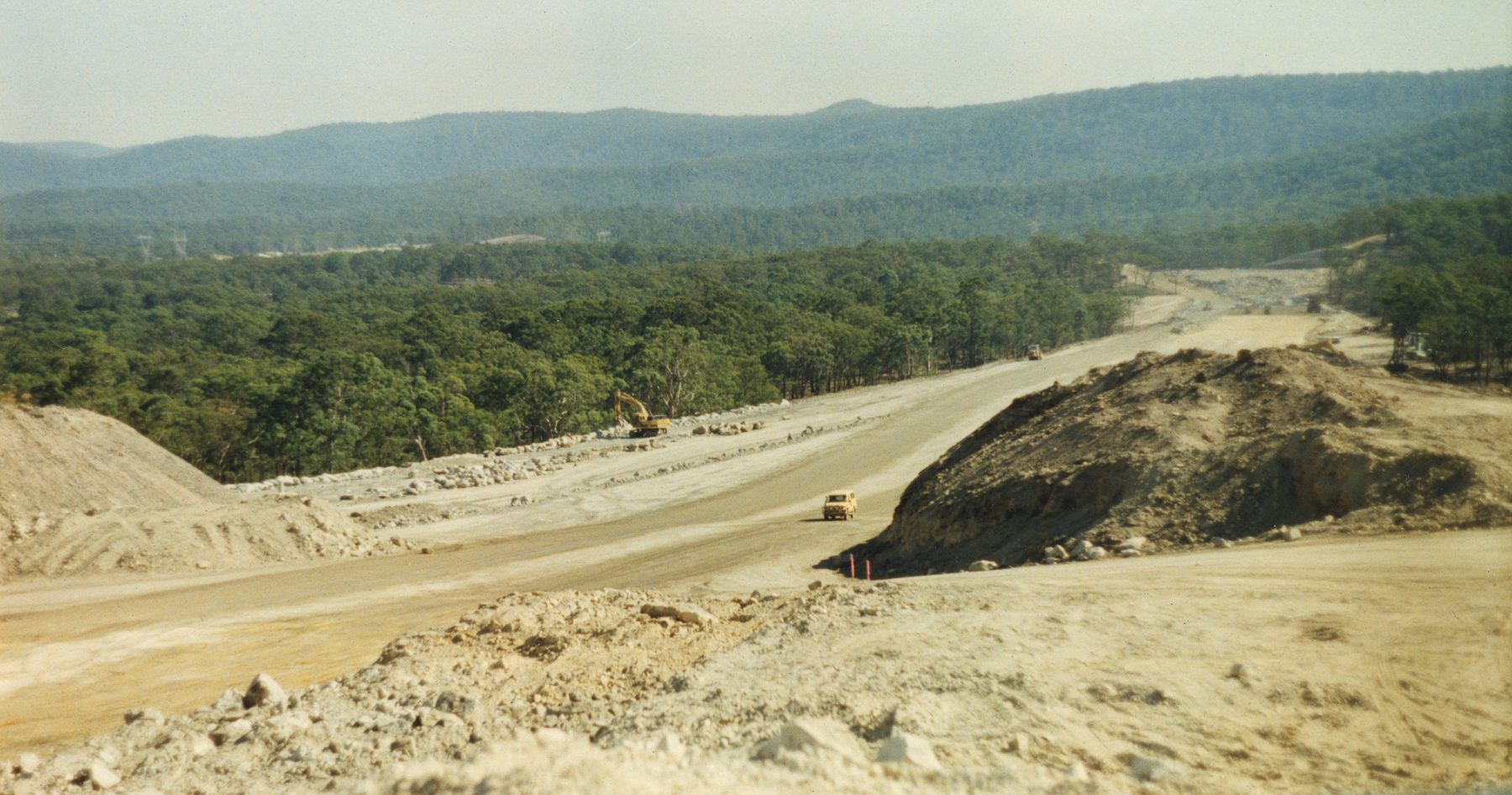
Photo suggestionHume Freeway Gunning drill and blast site, 1991
Expected file: photos/1991-hume-freeway-gunning.jpg
1991
The F3 Freeway, Newcastle
Further north, the drill and blast contract at West Wallsend, Newcastle, followed — part of the F3 National Freeway package, contracted to Abigroup, and a sign of just how far the business's reputation now reached.
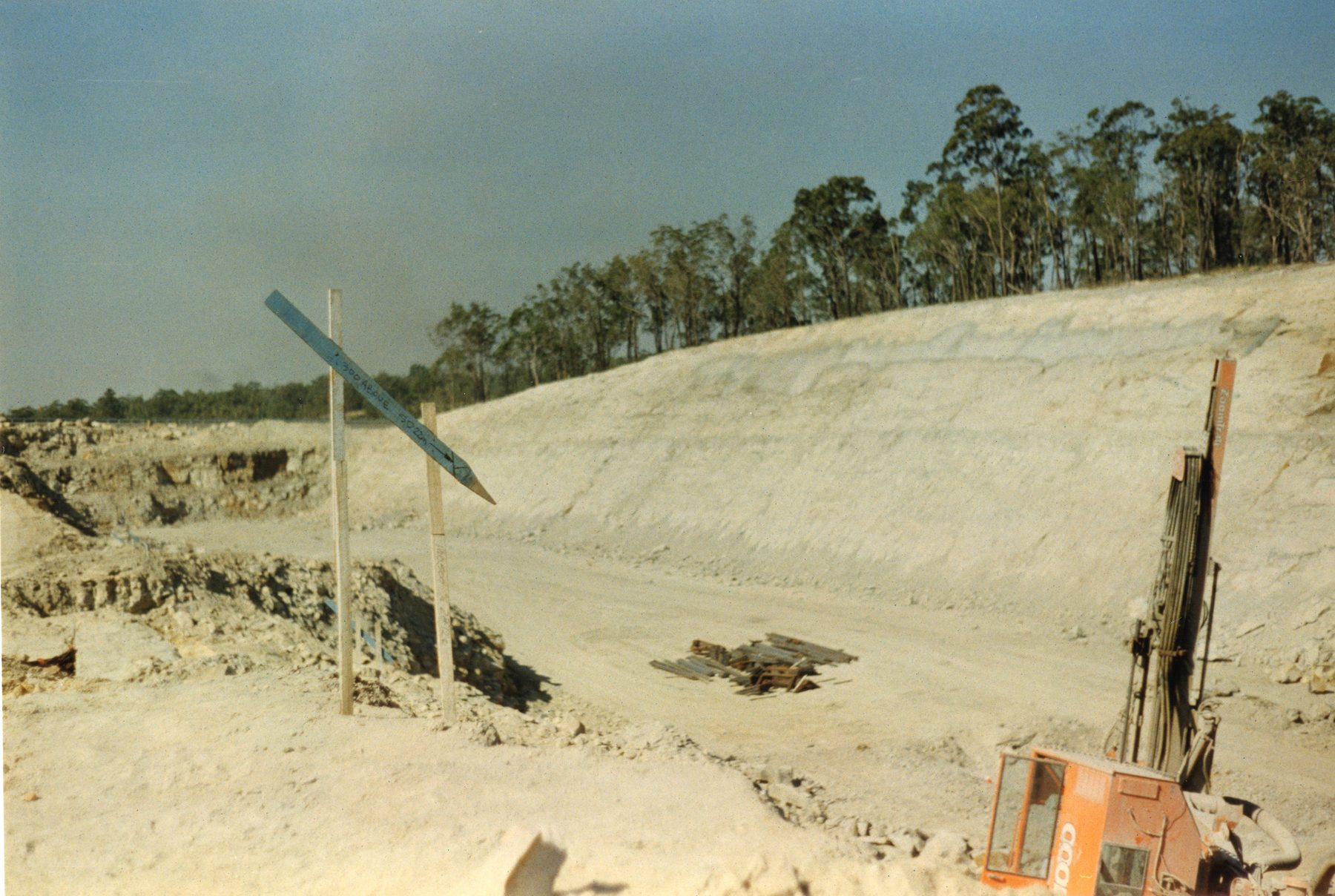
Photo suggestionF3 Freeway drill and blast works, West Wallsend NSW, 1991
Expected file: photos/1991-f3-freeway-newcastle.jpg
1991
Gippsland Quarries — and Flood Response
Closer to home, contract work began across a number of quarries throughout Gippsland, and the same year the team carried out large-scale drill and blast works as part of the region's response to the 1989 floods.
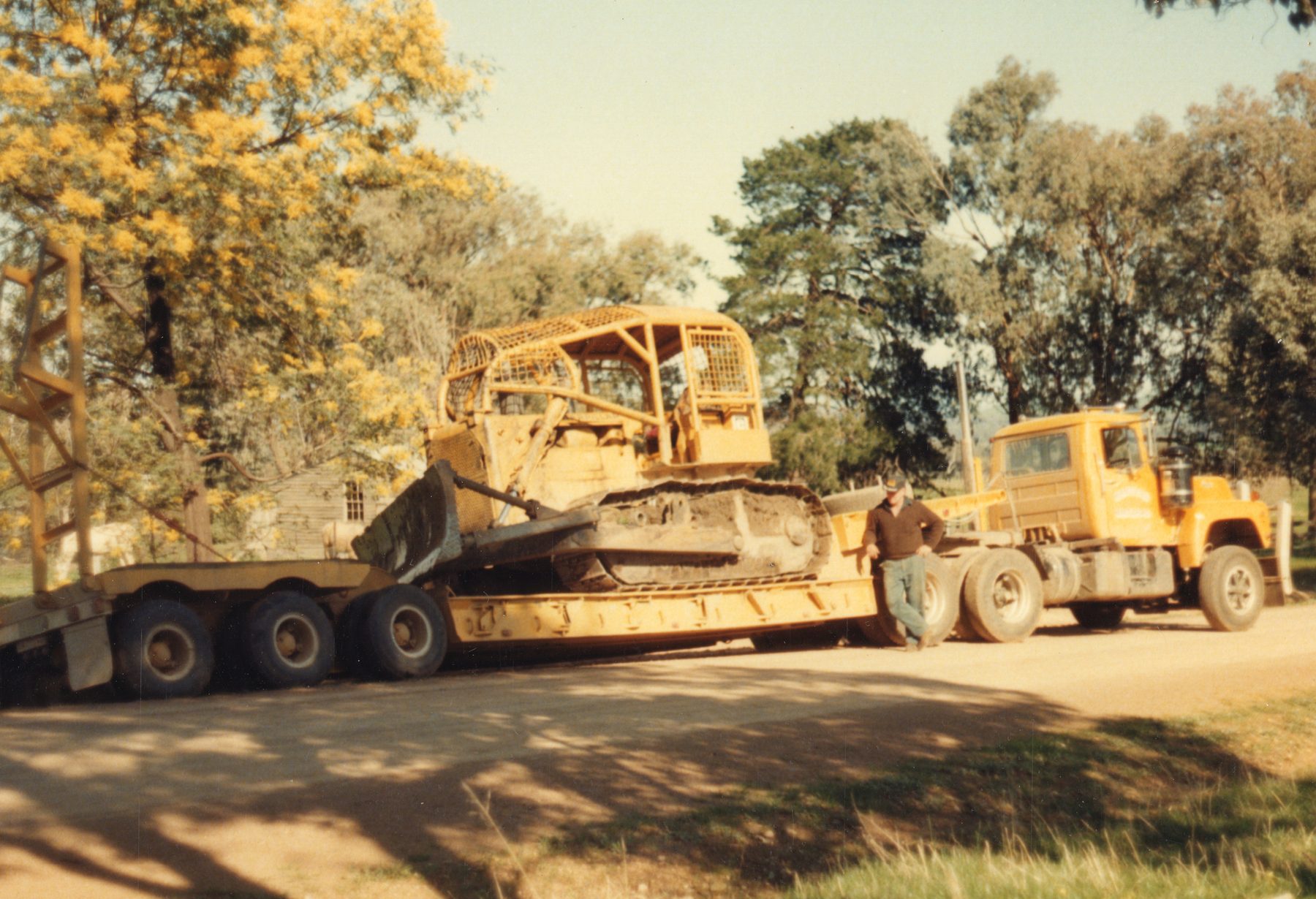
Photo suggestionGippsland quarry drill and blast operations, 1991
Expected file: photos/1991-gippsland-quarries.jpg
1992
The Nepean Dam Spillway
The drill and blast package for the Nepean Dam spillway followed — another major water infrastructure project, and a marker of how far the business had come since a fourteen-year-old first picked up a shovel in Jamieson.
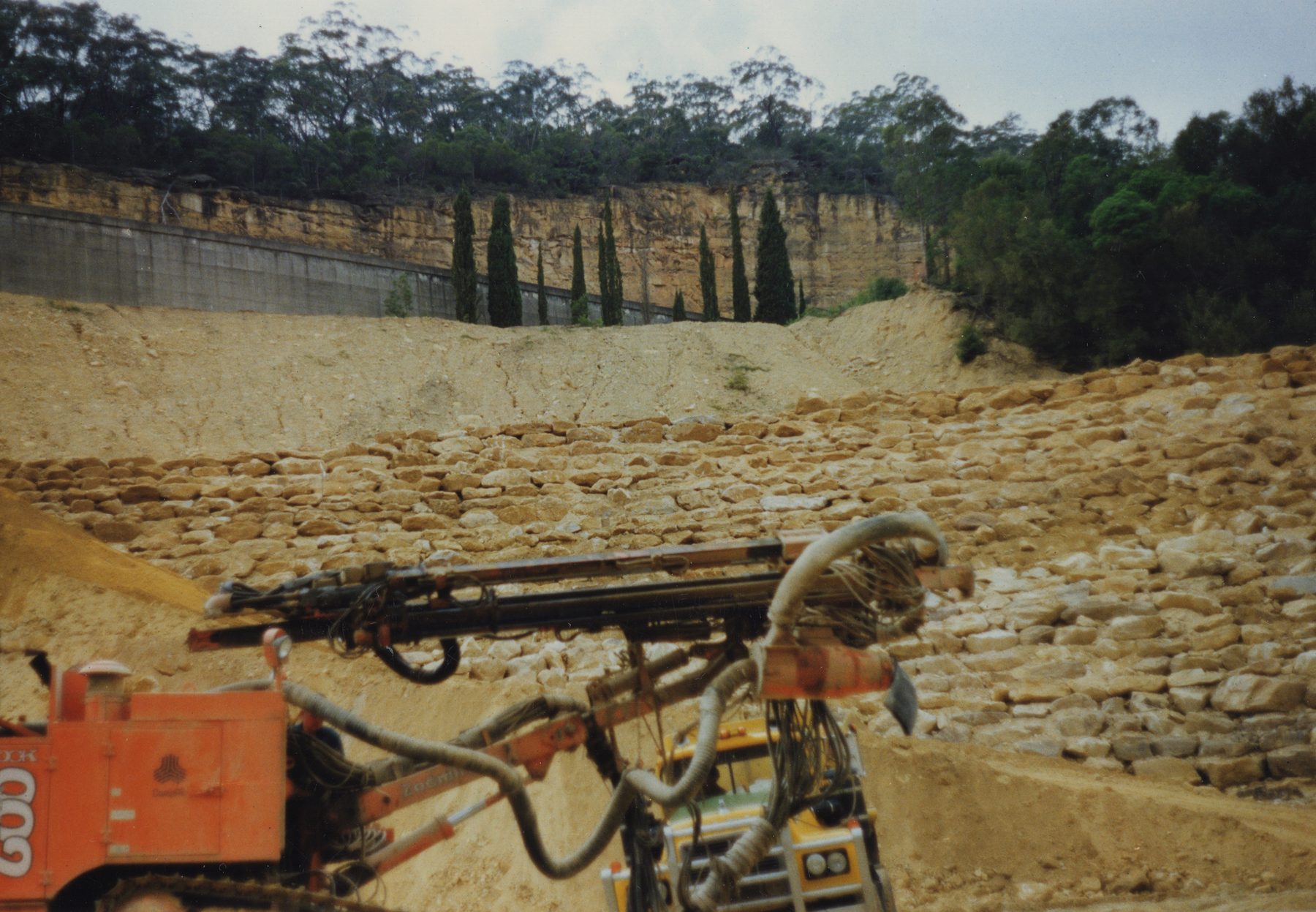
Photo suggestionNepean Dam spillway drill and blast works, 1992
Expected file: photos/1992-nepean-dam.jpg
1992
Mining Contracting, QLD
Drill and blast work at a mine site in Queensland extended the business's reach interstate for the first time — proof the standard travelled just as well beyond Victoria's borders.
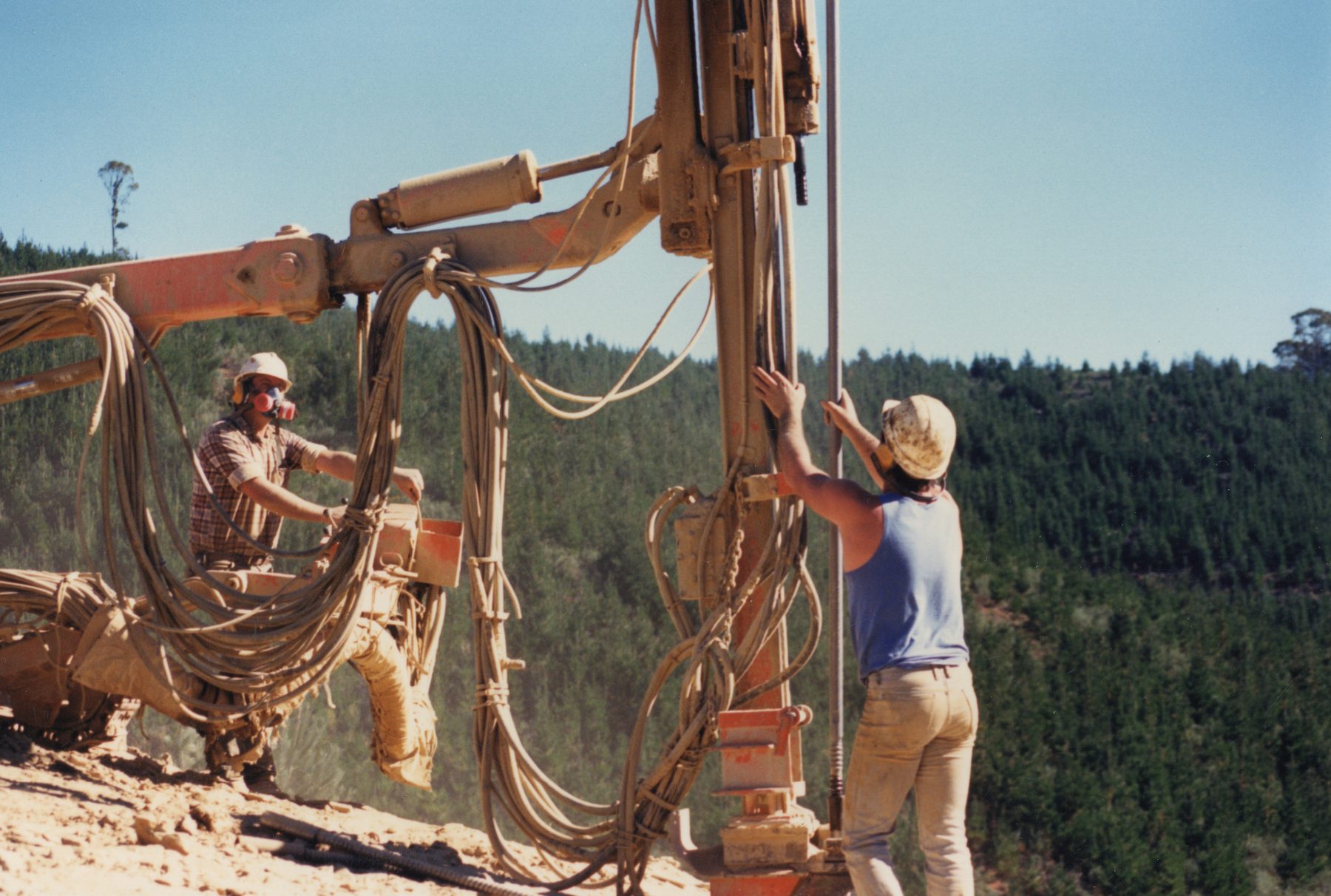
Photo suggestionOpen-cut mine bench drilling, QLD, 1992
Expected file: photos/1992-qld-mine.jpg
1994
RM Drilling Is Formed
RM Drilling was formed — a specialised contract drill and blast business that went on to become a well-known name across Victoria and New South Wales, servicing roadworks, construction, quarry, forestry and river board projects right up until the founding of Fullbore Quarry Services.
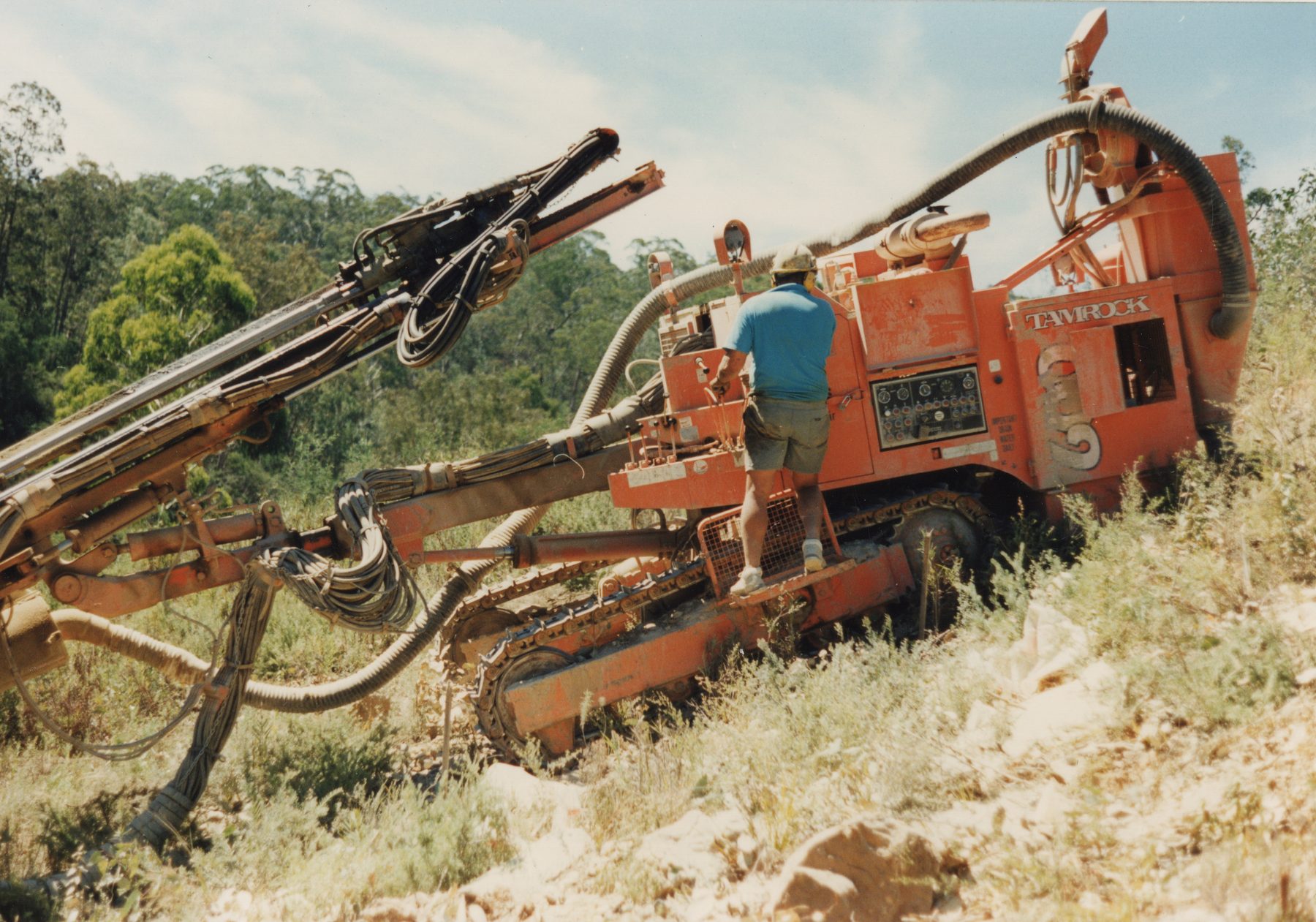
Photo suggestionRM Drilling crew and equipment, mid-1990s
Expected file: photos/1994-rm-drilling.jpg
2013
Fullbore Quarry Services Founded
Fullbore Quarry Services was founded in 2013 by Wayne, Denise and Luke Martyn — a family affair from day one, with Wayne and his wife Denise standing behind their son as he set out to build a business of his own, carrying the same standard his father had spent a lifetime building. Established as a premier drill and blast contractor to the quarry and construction sectors, it became the first in the industry to fully adopt GPS survey and drilling technology across its entire fleet, and rolled it out to customers nationally. Today it operates across six states with more than 100 staff.
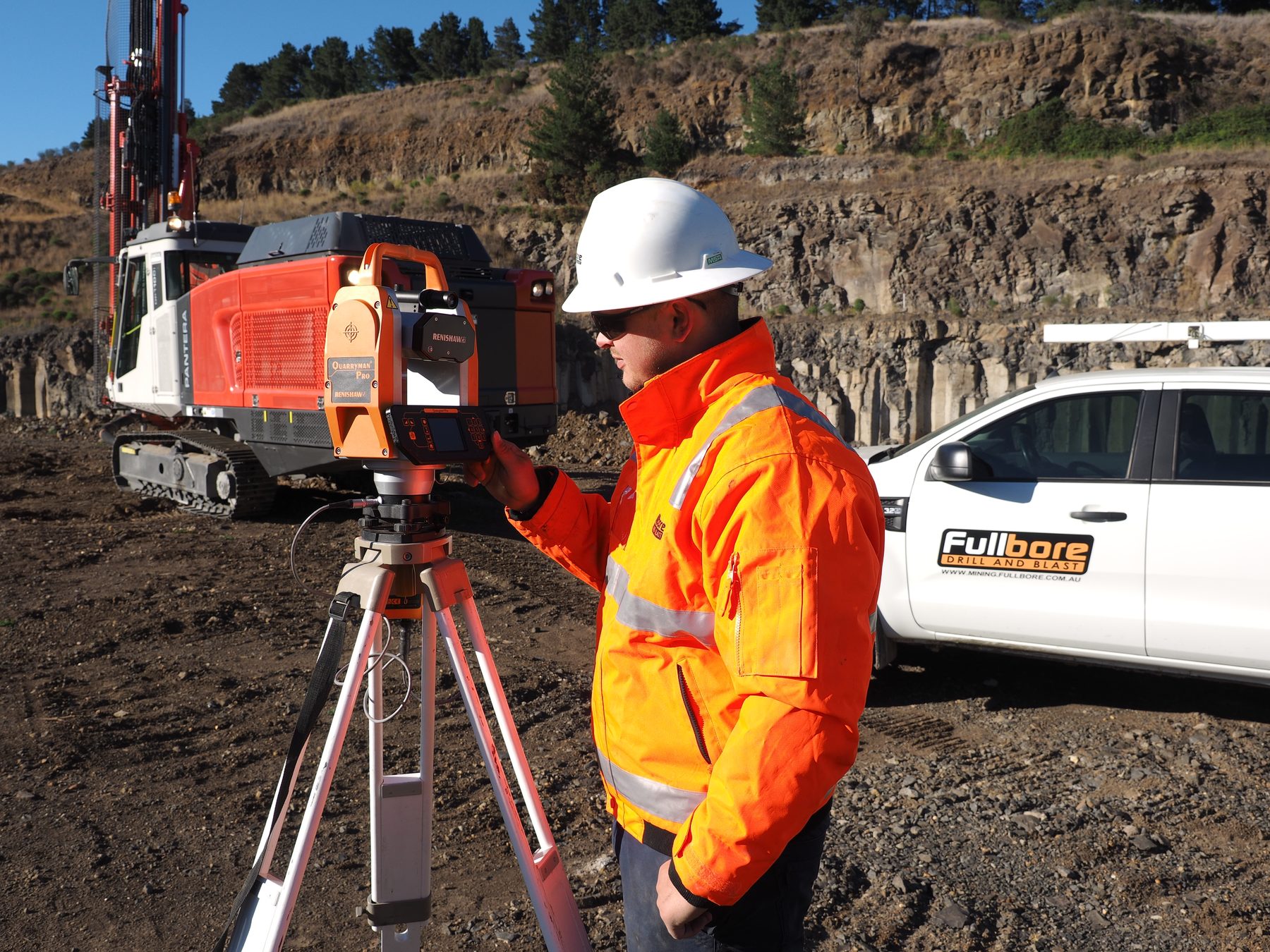
Photo suggestionFullbore Quarry Services crew surveying with GPS equipment on site
Expected file: photos/2013-fullbore-quarry-services.jpg
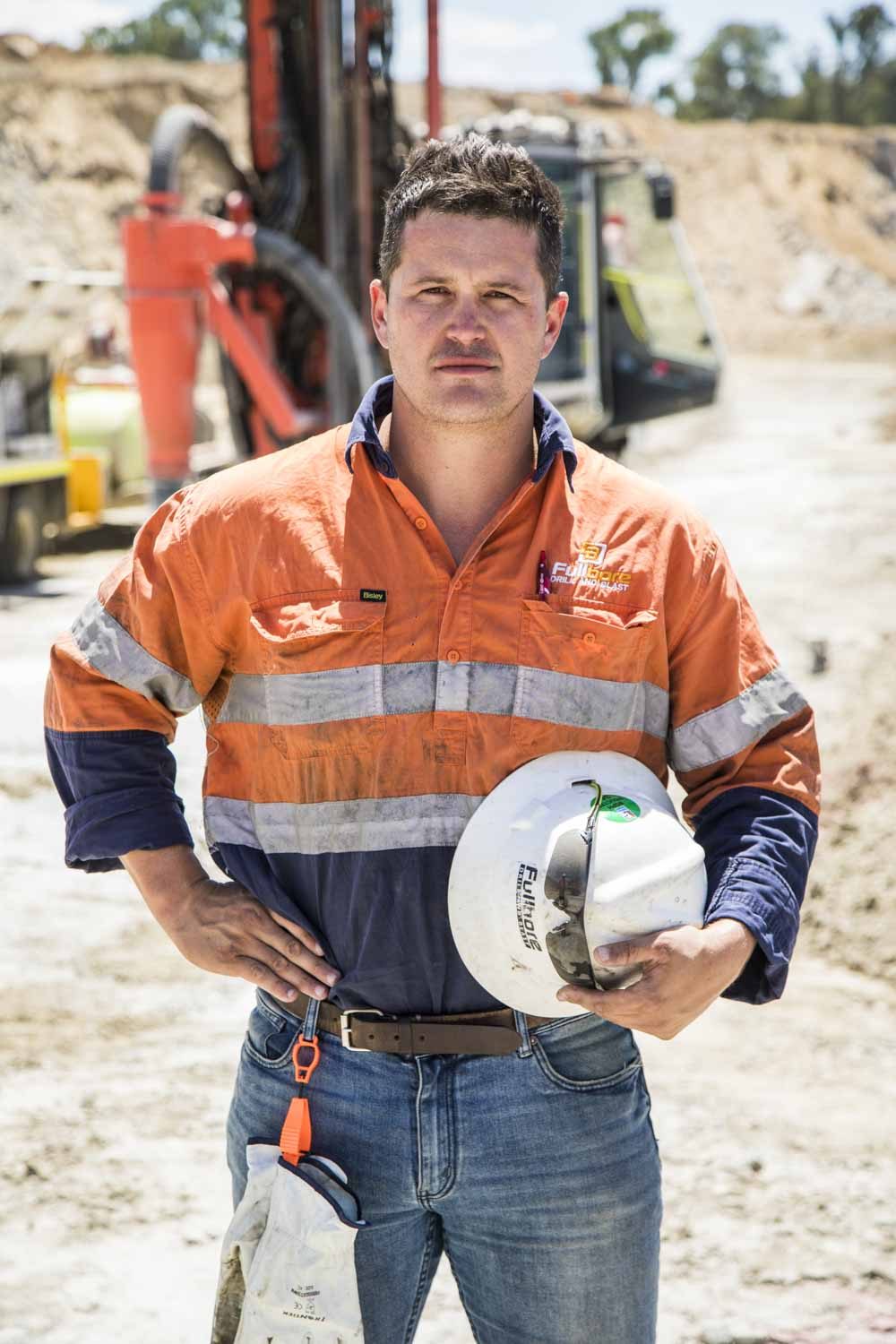
Photo suggestionLuke Martyn on site
Expected file: photos/luke-martyn-fullbore.jpg
2023
Martyn Mining Services Is Formed
Ten years on from Fullbore, Luke Martyn — Wayne's son — founded Martyn Mining Services, built specifically to serve the mining sector with large-scale drill and blast projects. The same standard his father set, applied to a bigger stage.
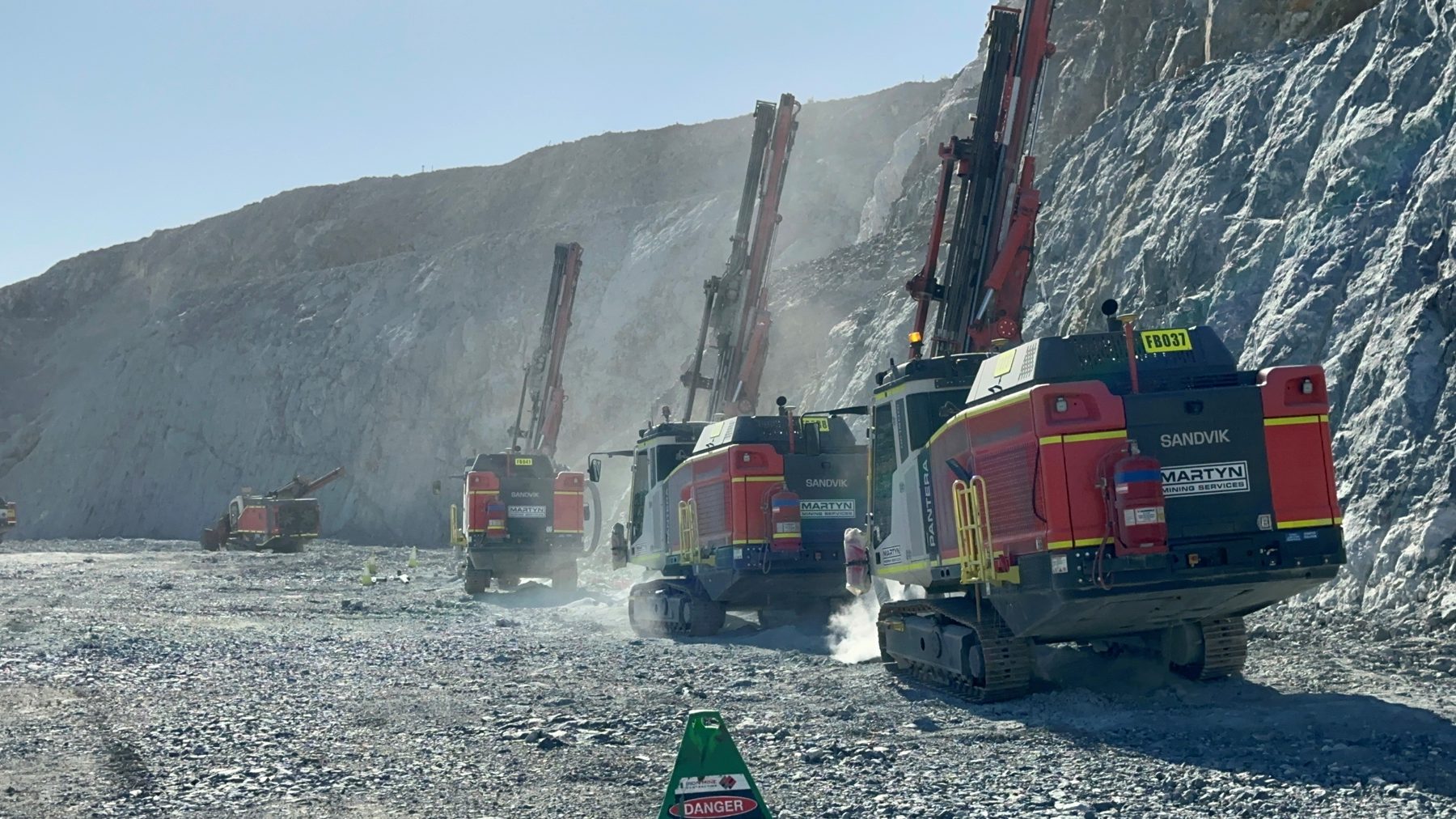
Photo suggestionMartyn Mining Services fleet or launch, 2023
Expected file: photos/2023-martyn-mining-services.jpg
2026
Martyn Engineering — and a New Workshop
Martyn Engineering was established as a specialist quarry and mining machine and component rebuild centre — a dedicated support business to Martyn Mining Services and Fullbore Quarry Services, handling heavy equipment and component rebuilds and repairs, both internal and external. The same year, the new purpose-built workshop was completed on the Hume Highway, Wodonga.
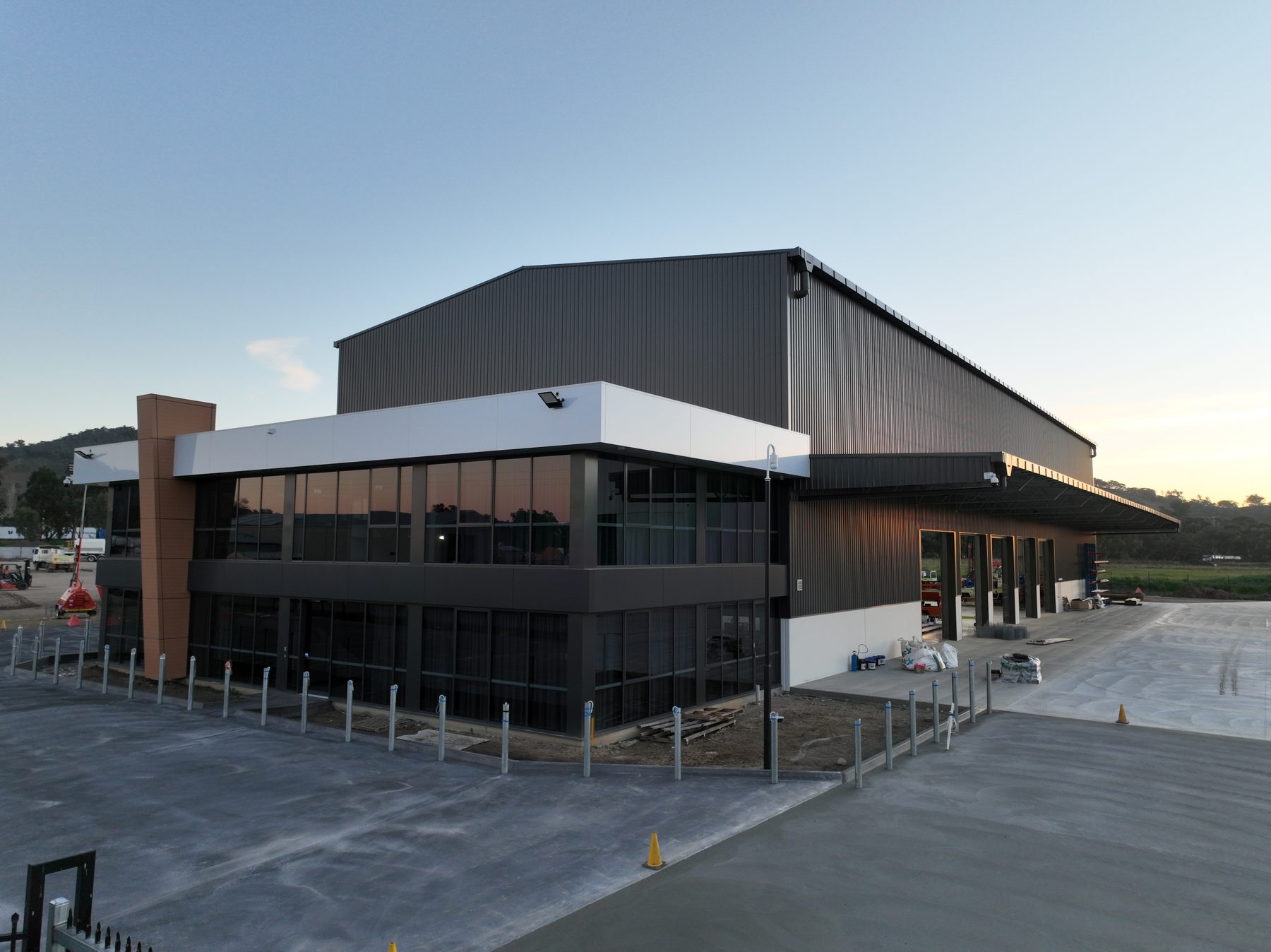
Photo suggestionNew Martyn Engineering workshop, Hume Highway Wodonga, 2026
Expected file: photos/2026-martyn-engineering-workshop.jpg